THE UNIVERSAL STUDENT
There are three old books in my library that I have known for most of my life.
They belonged to my grandfather, William.
The Modern Carpenter and Joiner.
One day, those books will belong to my son Oscar.
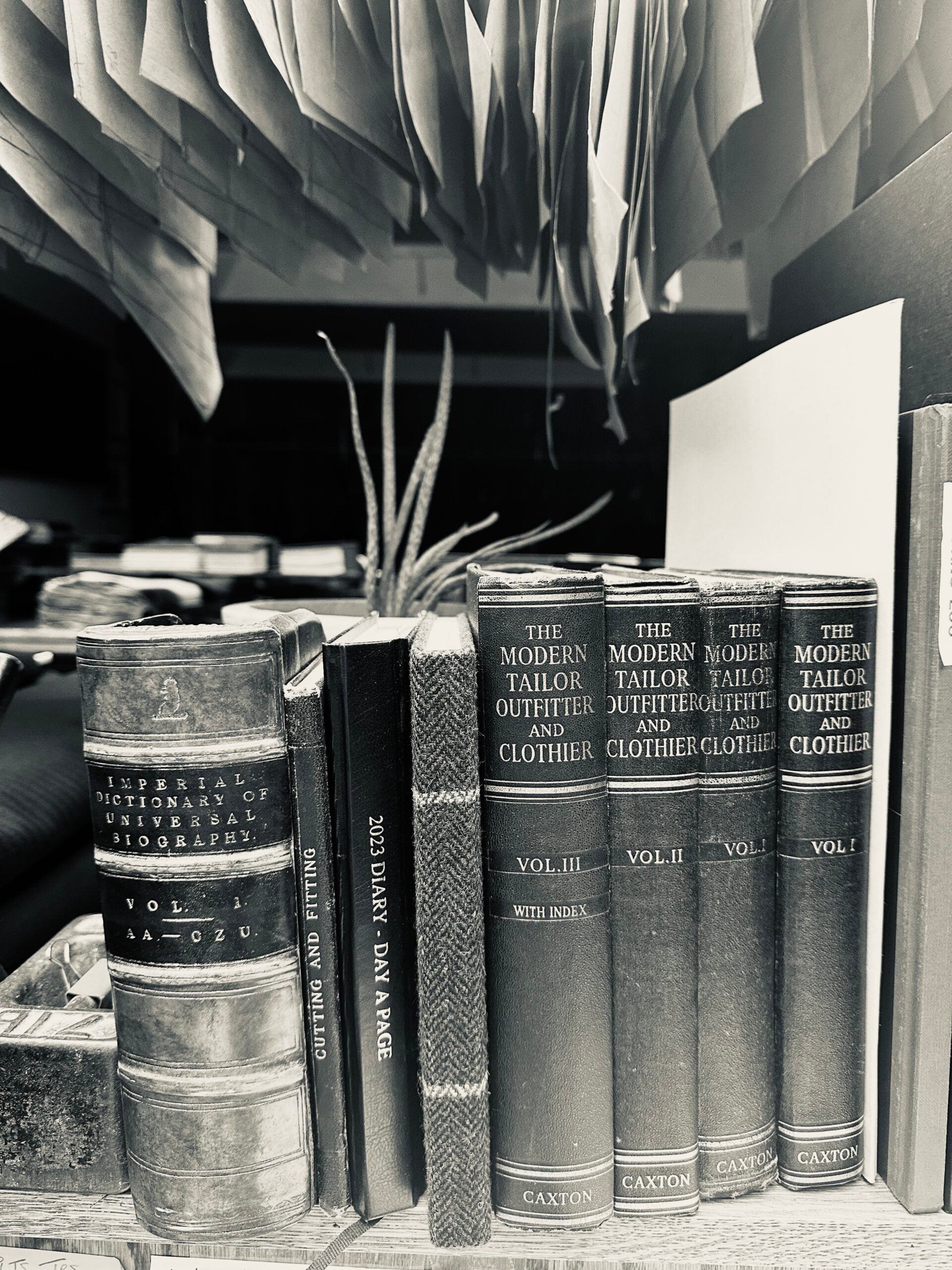
During a recent visit to Huntsman at No. 11 Savile Row, I noticed another collection of old volumes on display. The Modern Tailor, Outfitter and Clothier. Different trade. Different materials. Different tools. But something about seeing those books stopped me.
Here were generations of accumulated knowledge from two different disciplines, recorded so that those who followed would not always have to begin again. And it made me wonder whether our disciplines are really as separate as we sometimes imagine.
THE STARTING POINT
Some years ago, while touring vineyards, I had a conversation with an Australian winemaker. He spoke about drawing upon the long traditions of European viticulture while embracing newer techniques and the science available to his generation. There was no disrespect for tradition in this. Quite the opposite. The accumulated knowledge mattered enormously. But it was a starting point rather than a finishing point.
At design school we were taught something similar. It was perfectly acceptable to copy, we were told, provided we left our own mark. I don't think the lesson was ever really about copying. It was about understanding that very little creative work begins from nothing. Architecture certainly doesn't.
We inherit archetypes, principles, materials, construction methods and centuries of accumulated solutions to recurring problems. We study what others have done. We learn why it worked. And then, hopefully, we add something of our own.
Inheritance gives us a starting point. Innovation gives us permission to take it somewhere new.
VERY SIMILAR PLAYBOOKS
The more I think about it, the more I suspect that many apparently unrelated disciplines are asking variations of the same questions. A tailor considers proportion, material, structure, detail and the person for whom something is being made. So does an architect. So does a cabinetmaker.
A brewer learns the characteristics of ingredients, respects established methods and then experiments with combinations, processes and time. So does a winemaker.
Music is no different. A composer writing centuries ago and a musician writing today may inhabit entirely different worlds, yet both can draw upon the same scales, the same relationships between notes and the same fundamental language of rhythm, harmony and melody. The modern musician doesn't diminish what came before by allowing it to influence what comes next. They listen. They absorb. And then they add their own voice.
Perhaps we are all working from variations of very similar playbooks. Material. Structure. Rhythm. Repetition. Judgement. Experimentation. Tradition. Innovation. And ultimately, people.
The finished results may have very little in common. A suit is not a library. A bottle of wine is not a building. A piece of music cannot be sat upon, walked through or climbed. But the thinking behind their creation can sometimes speak remarkably similar languages.
Which raises an interesting possibility. Perhaps one of the best ways to become better at your own discipline is occasionally to stop looking at it.
LOOKING SIDEWAYS
During our recent trip to England and France, I wasn't conducting research for Groth & Sons. I was on holiday. Yet I found myself watching.
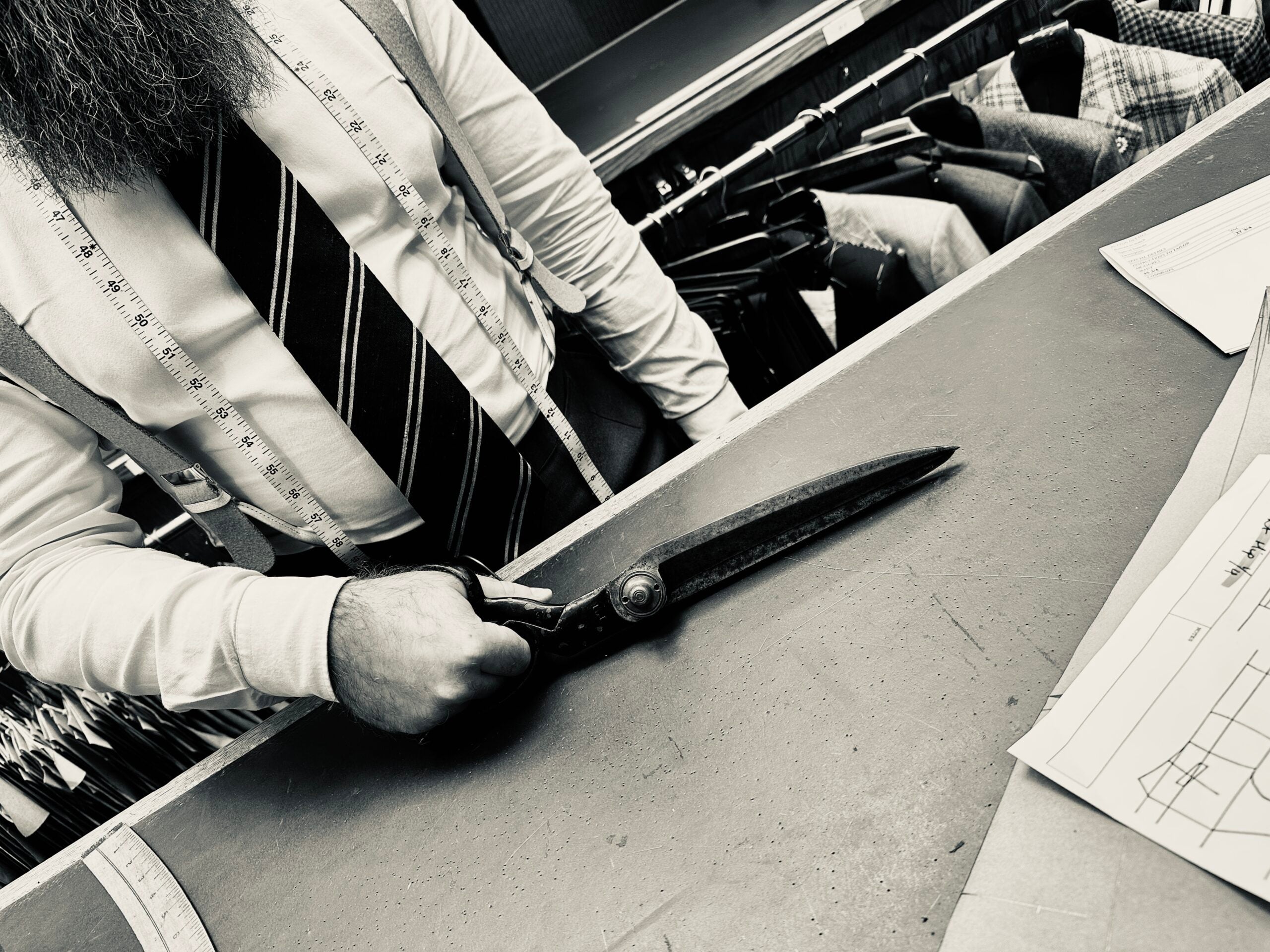
At Huntsman I watched craftspeople working within a tradition that has survived generations while continuing to serve the present. At Hall & Woodhouse I saw centuries of brewing knowledge sitting comfortably alongside a micro-brewery created for experimentation. I watched florists make something beautiful while knowing from the outset that it would disappear. I walked through old buildings and cathedrals. I talked to craftspeople, family and complete strangers.
None of these experiences came with instructions explaining how they might improve a library we build in Sydney. Nor should they. We don't always know what we've learnt at the moment we learn it.
Sometimes an idea simply enters the library. It sits on the shelf. Years later, something causes us to reach for it.
THE PINSTRIPE
Our Savile Row library ladder is a small example. The idea didn't come from another library ladder. It came from tailoring. A pinstripe.
An idea belonging naturally to one discipline suddenly found its way into another. The rails of a library ladder became the pinstripes of a suit. Nobody needed to reinvent the pinstripe. We simply needed to see it differently.
Perhaps innovation often works that way. Not through some miraculous flash of originality, but through connections. Something seen here. Something learnt there. Two apparently unrelated ideas placed beside one another. And suddenly there is a third.
THE UNIVERSAL STUDENT
I have always told my sons:
Try to go to bed smarter than when you got up.
I don't mean academically smarter. I mean remain curious. Notice things. Ask questions. Read. Travel when you can. Look at buildings. Listen to music. Talk to people. Walk into the workshop of somebody who makes something completely different from you and watch how they work.
Because a craftsman doesn't only learn from other craftsmen. A designer doesn't only learn from other designers. A tailor can teach a cabinetmaker. A brewer can teach a designer. A winemaker can teach a manufacturer. A composer dead for two hundred years can still teach a musician writing today. An old building can teach somebody working with machinery its builders could never have imagined. And another human being, from another culture, another country or another generation, can occasionally show us something about ourselves.
The universal student understands that knowledge doesn't have to come from his own discipline to belong in his education. The subject changes. The principle doesn't.
We remain students.
WHAT WE PASS ON
Which brings me back to those books. The Modern Carpenter and Joiner. The Modern Tailor, Outfitter and Clothier. Their value isn't that everything within their pages should still be followed. Their value is that somebody took the trouble to record what had been learnt.
We don't honour the people who came before us by pretending they had the final word. We listen. We understand. We question. We keep what remains useful. And we add something of our own before passing it on.
That is what I hope happens with Oscar. I don't want him to reproduce my working life. The tools will change. The technology will change. His influences will be different. Groth & Sons should change with him.
My responsibility isn't to hand him a map and insist that he follows my route. Perhaps it is simply to give him a compass.
Then trust him to travel.
A Closing Thought
Perhaps we divide knowledge into disciplines because it makes the world easier to organise. Architecture belongs here. Tailoring there. Brewing somewhere else. Cabinetmaking in another workshop entirely.
But ideas are rather less obedient. They cross borders. They change hands. They move between generations. They travel from a vineyard to a design studio, from Savile Row to a Sydney workshop, from an old book into the hands of somebody working with tools its author could never have imagined.
Perhaps that's how knowledge has always moved forward. One person learns something. Another notices. Something is borrowed. Something is questioned. Something new is added. And then it is passed on again.
Observe. Learn. Understand. Question. Make. Pass it on.
Perhaps none of us ever really finishes our education. We simply become responsible for deciding what to do with everything we've been fortunate enough to learn.
And tomorrow, if we're paying attention, there will be something else.
Beyond the Drawing Board
Reflections from Groth & Sons