LEARNING TO SEE
On the language every designer inherits
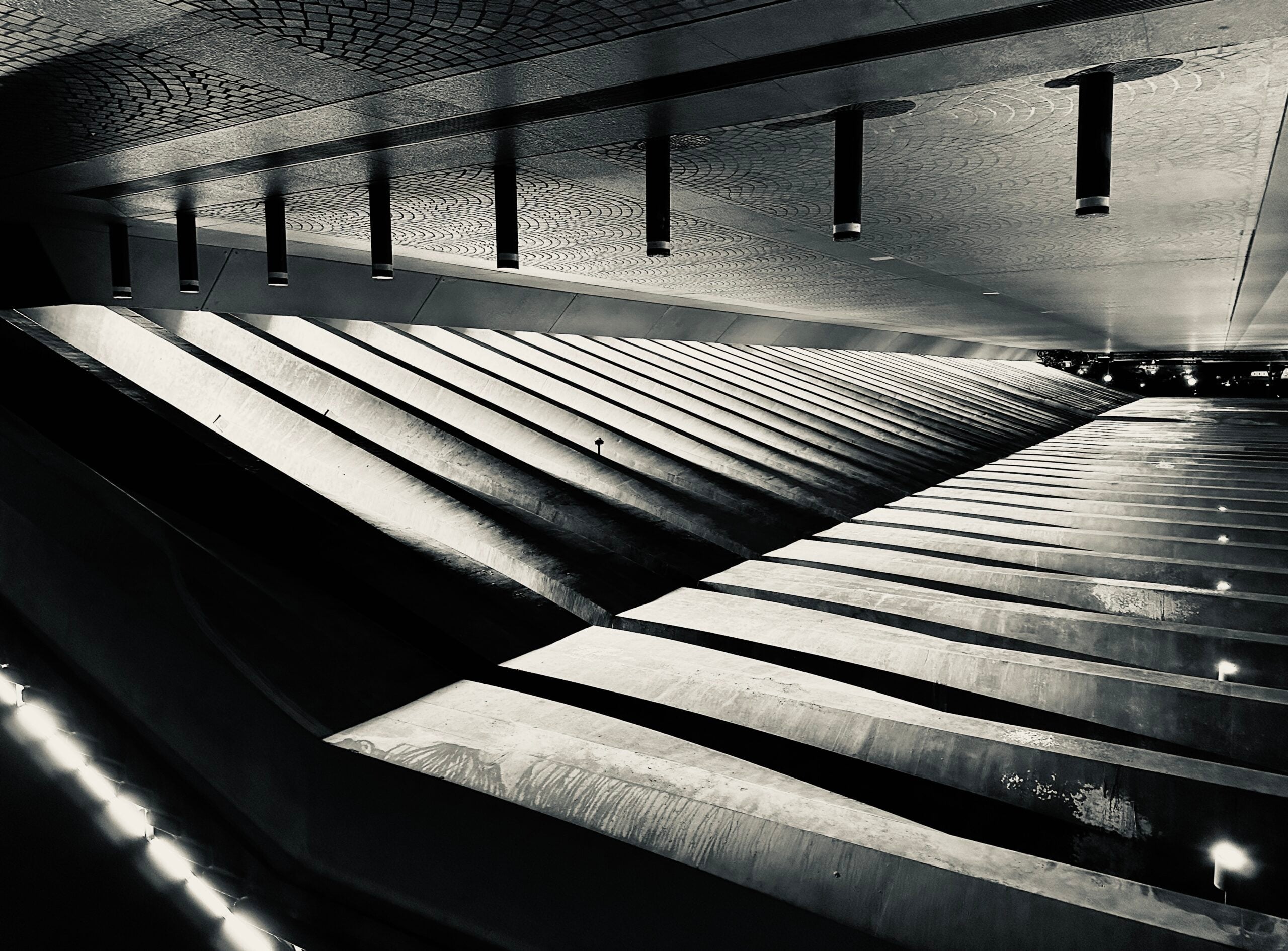
Learning to see is the most important lesson a designer can carry into a lifetime of work. Like most Englishmen of my generation, I have never quite mastered a second spoken language. Over the years I have made several attempts to improve my rather ordinary schoolboy French. Vocabulary is one thing. Fluency is something altogether different. There is, however, another language that I have spent almost fifty years learning. It has no verbs. No nouns. No dictionaries. Yet it has shaped almost every room I have ever designed. It is the language of design. Looking back at design school, the single most important lesson I carried into my career was understanding the Elements and Principles of Design. Until then I simply looked at things. Afterwards, I began to see them. Balance. Rhythm. Scale. Hierarchy. Contrast. Unity. Proportion. Once you recognise these relationships, they become impossible to ignore. The world quietly reorganises itself before your eyes. The classical language of architecture became another teacher. The five orders were never simply different columns. They were grammar. A column is vocabulary. A cornice is vocabulary. A moulding is vocabulary. Grammar lies in the relationship between the parts. One sentence by Giacomo Barozzi da Vignola has remained with me for decades: “It is always necessary to know what we want our eyes to see.” Today our workshop is filled with remarkable technology. Computer modelling, CNC machining, laser measuring and artificial intelligence have transformed the way Oscar and I work. They make us faster, more accurate and vastly more efficient. But they do not replace judgement. A CNC machine can cut almost anything with astonishing precision. Artificial intelligence can generate drawings, images and ideas in seconds. Technology can reproduce what we imagine. It cannot decide what deserves to exist. That responsibility still belongs to the designer. I often wonder what the Egyptians or the Roman engineers might have built had they possessed today’s technology. Yet I suspect they would still have begun where they always did—with mathematics and geometry. The tools evolve. The principles endure. Every generation stands on the shoulders of those who came before. Looking back, I realise I have not spent my life simply learning to design libraries. I have spent my life learning to see.
A Closing Thought
Every generation inherits its tools. Very few inherit judgement. That must be earned—patiently, one drawing, one mistake and one observation at a time.
Beyond the Drawing Board Reflections from Groth & Sons