THE KINDEST THING I EVER DESIGNED
Sometimes the most important things we create are not made of timber at all.
More than ten years ago, our youngest son Harry became critically ill. For weeks my wife and I barely slept. We sat beside his hospital bed, surrounded by machines, watching the quiet courage of children and families who were facing burdens no one should have to carry. It was one of the most difficult periods of our lives. One evening, sitting beside Harry, I found myself asking a question that has stayed with me ever since. 'How can I help?' I knew I would never become a doctor. I couldn't cure illness, prescribe medicine or perform surgery. But surely there had to be another way to ease suffering, even if only for a few moments. That evening I made myself a promise. When my years of building libraries eventually come to an end, I will learn the art of close-up magic and spend time visiting sick children in hospital. Not because tricks matter. Because smiles matter.
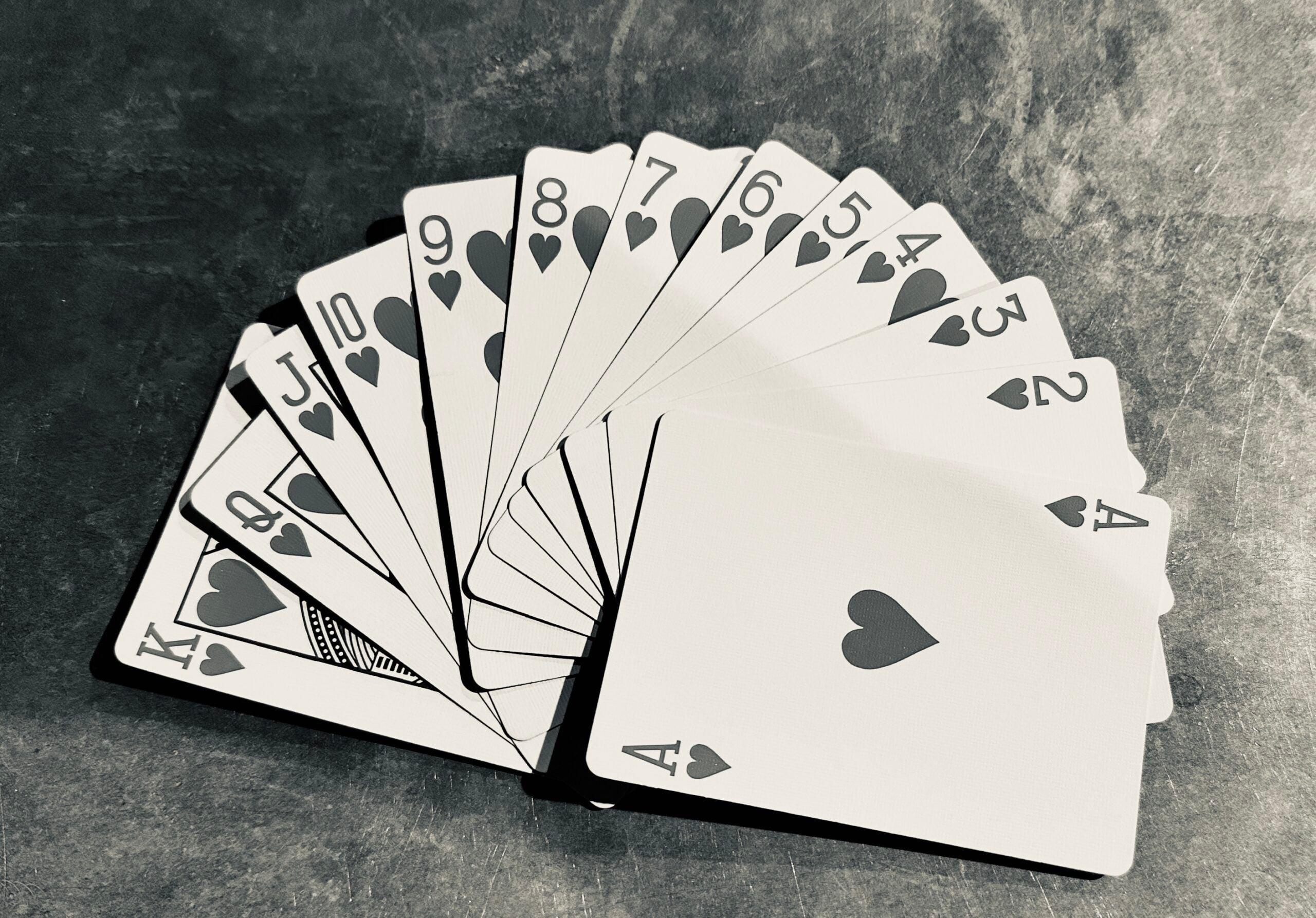
The more I have studied card magic, the more I have realised how much it resembles architecture. Both begin with structure. An architect may have bricks, timber, steel and stone; a card magician has just fifty two pieces of printed card. Neither is particularly remarkable in isolation. It is the order in which those simple elements are assembled that creates something greater than the sum of its parts. Both also depend upon a great deal of engineering that is never meant to be noticed. In a building, we rarely think about the beam carrying the floor above us, the services concealed within a wall or the structure holding a staircase in place. We simply experience the room. In card magic it is much the same. A double lift, a pass, a false shuffle or a carefully arranged stack is the hidden structure supporting the illusion. If the audience becomes conscious of the engineering, some of the magic has already been lost.
Then there is the question of where we look. Architecture has always understood this. A doorway frames a view. A corridor draws the eye towards something beyond it. A change in ceiling height can make us instinctively look upwards. A window placed at precisely the right point can turn an ordinary landscape into a picture. The magician works with sightlines too, although his architecture exists for only a few moments. A gesture, a glance, a pause or a question can quietly direct attention away from the place where the real work is happening. The audience believes it is choosing where to look, when in fact the journey has been carefully designed. And neither discipline leaves much to chance. Long before a building is constructed, it exists as drawings, dimensions and sequences in the architect's mind. A card routine is not so different. What appears to be a spontaneous conversation around a deck of cards may have been rehearsed hundreds of times. Every movement has a reason. Every pause has its place. Even the moments that appear accidental may have been designed.
Perhaps that is what fascinates me most. The better the design, the less visible the design becomes. A beautiful room should not announce the calculations that made it possible. And good magic should never feel like a demonstration of technique. In both cases, all that hidden work exists for one purpose: to create an experience for somebody else. And when either is done particularly well, something rather wonderful happens. We stop looking for the structure. And simply experience the wonder.
Looking back, I realise that this has always been the thread running through my working life. Libraries are not simply about books. Architecture is not simply about buildings. Magic is not simply about cards. Each is an invitation to pause, to imagine and, for a brief moment, to see the world a little differently. I have spent nearly fifty years designing places where stories are collected and shared. Perhaps retirement will simply be another apprenticeship. This time, instead of building shelves for stories, I hope to tell them with nothing more than a deck of cards. If, in doing so, I can help a frightened child forget their circumstances for a few precious minutes... I will consider it among the finest work of my life.
A Closing Thought
Kindness is rarely measured by the size of the gesture. Sometimes it is measured by the smile that appears when someone forgets, if only briefly, that they are afraid.
Beyond the Drawing Board
Reflections from Groth & Sons